
The information in this article is for educational purposes only and is not intended to diagnose, treat, or replace medical care. Always consult with your physician or qualified healthcare professional before starting any new supplement program, especially if you have a medical condition or are taking medications.
When we think about aging well, we often focus on wrinkles, energy levels, or metabolism. But beneath the surface, something even more important is changing — our bones.
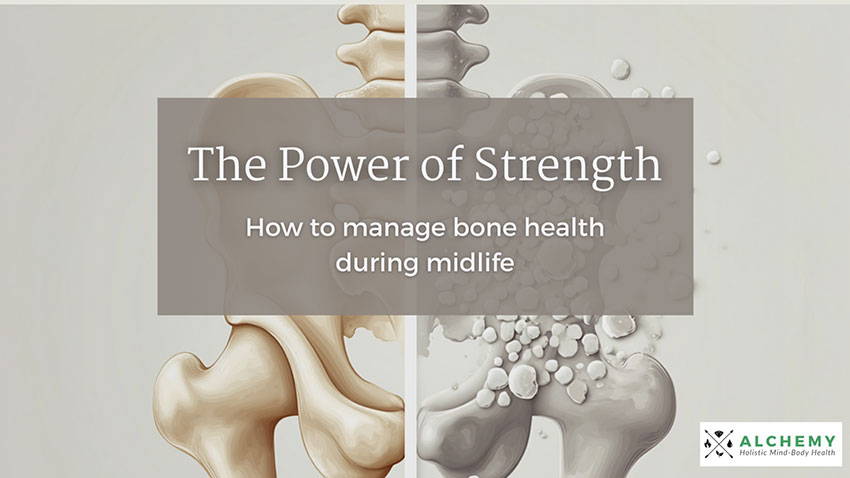
Bone health doesn’t usually get attention until there’s a problem. Yet our bones are living, dynamic tissue, constantly breaking down and rebuilding. And as hormones shift with age, that balance begins to change.
Understanding what’s happening and what you can do about it is one of the most empowering steps you can take for lifelong strength.
What Happens to Bone Health as We Age?
Bone health is closely tied to hormones.
In our younger years, bone building outpaces bone breakdown. We reach peak bone mass somewhere between our late 20s and early 30s. After that, the scales slowly begin to tip.
- Estrogen plays a major role in maintaining bone density. As estrogen declines — especially during perimenopause and menopause — bone breakdown accelerates.
- Testosterone, important for both men and women, also supports bone formation, muscle mass, and overall skeletal strength.
As these hormones shift, bone remodeling becomes less balanced, leading to gradual bone loss.
For women, bone loss can happen rapidly in the first 5–10 years after menopause.
Women can lose up to 20% of their bone density in the 5–7 years following menopause. 1 in 2 women over age 50 will experience a bone-related fracture in their lifetime. Up to 33% of women over the age of 50 die within one year of a hip fracture.
Bone loss is silent — you won’t feel it happening.
That’s why prevention is everything.
Why Bone Health Matters More Than You Think
Bones are not just structural. They are foundational to independence, mobility, and quality of life.
Strong bones mean:
- Lower fracture risk
- Better posture and balance
- Greater resilience with falls
- The ability to stay active and strong
Once a fracture occurs — especially hip or spine fractures — recovery can be difficult and life-altering. Protecting bone health isn’t about fear. It’s about freedom.
Strength Training: Muscle Is the Key
If there’s one message to remember, it’s this:
Muscle protects bone.
Weight-bearing and resistance exercises are especially powerful:
- Squats and lunges
- Deadlifts
- Step-ups
- Push-ups
- Resistance band training
- Weighted carries
Strength training also improves balance, coordination, and reaction time — reducing fall risk, which is just as important as bone density itself.
Nutrition: Feeding Your Framework
You cannot build strong bones without the right materials.
Calcium
Calcium is the primary mineral in bone. If dietary intake is low, the body pulls calcium from bones to maintain blood levels — gradually weakening them.
Good sources include:
- Dairy products
- Sardines and salmon with bones
- Leafy greens
- Fortified foods
Supplementation can help fill gaps when intake is insufficient.
Vitamin D is crucial because it helps your body absorb calcium effectively.
Without adequate vitamin D, even high calcium intake won’t fully benefit your bones.
Vitamin D comes from:
- Sun exposure
- Fatty fish
- Egg yolks
- Fortified foods
- Supplements
A comprehensive bone-support formula like Osteoforce Supreme can provide:
- Bioavailable calcium
- Vitamin D
- Magnesium
- Vitamin K2
- Trace minerals important for bone matrix strength
Vitamin K2 is especially important because it helps direct calcium into bones rather than soft tissues.
When combined with strength training and adequate protein intake, high-quality supplementation can become a powerful part of a bone-protection strategy.
A Lifelong Investment
Bone health isn’t something to think about at 65. It starts in your 30s. It accelerates in your 40s and 50s. And it determines independence in your 70s and beyond.
The powerful part? It’s never too late.
With:
- Intentional strength training
- Sufficient protein
- Smart supplementation (Calcium, Vitamin D, Osteoforce Supreme)
- Consistent movement
You can slow bone loss and, in some cases, even improve bone density.
Strong muscles. Strong bones. Strong future.
If you’re unsure about where to start or have any questions, book a Wellness Clarity Call.