
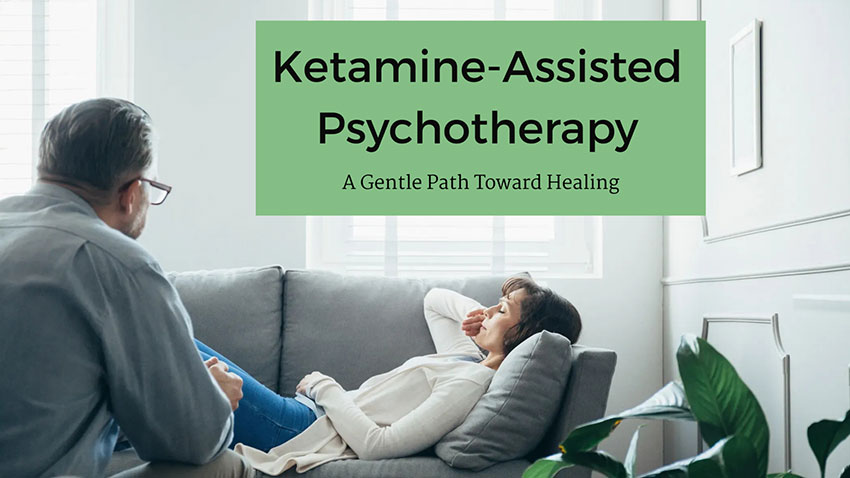
Ketamine-Assisted Psychotherapy (KAP) is an emerging approach that is helping people with depression, anxiety, and trauma find relief when traditional therapy and medications haven’t fully worked.
For many people, healing unfolds in layers, sometimes slowly or unexpectedly. And sometimes, it can leave you feeling stuck.
KAP offers another path to consider. One that can open new perspectives and deeper layers of awareness.
Rather than forcing change, this work creates the conditions where change can begin.
Why People Are Exploring Ketamine-Assisted Psychotherapy
Many people come to this work after trying so many other things.
They’ve done years of talk therapy.
They’ve tried medications.
They’ve read the books, listened to podcasts, practiced mindfulness, journaled, and done the self-work.
And still, something doesn’t shift.
Ketamine-assisted psychotherapy can offer support when healing feels blocked.
This work isn’t about fixing you or assuming something is broken. It’s about creating the internal conditions where your system can begin to shift.
Sometimes the mind understands what needs to change, but the nervous system hasn’t caught up yet.
KAP supports change at both levels.
Ketamine Therapy vs. Ketamine-Assisted Psychotherapy
Not all ketamine therapy is the same.
Some approaches focus primarily on the medicine itself, with little therapeutic support before or after the experience.
Ketamine-assisted psychotherapy (KAP) is different.
In KAP, the medicine is combined with the presence of a trained therapist and a structured integration process. This allows the experience to be processed, understood, and applied in a meaningful way.
Rather than just having an experience, you are supported in making sense of it.
This is where deeper, more lasting change can happen.
Ketamine-Assisted Psychotherapy in Santa Cruz and Aptos
If you’re exploring ketamine therapy in Santa Cruz or Aptos, it’s important to understand the different approaches available.
Working with a licensed therapist trained in ketamine-assisted psychotherapy offers a more integrated, relational experience.
This approach supports not only symptom relief, but also deeper emotional processing, nervous system regulation, and lasting change.
What Ketamine-Assisted Psychotherapy Is
Ketamine-assisted psychotherapy combines three essential elements:
- A guided ketamine experience
- Therapeutic support during the session
- Integration sessions afterward
The medicine opens a window.
The therapy helps make meaning and support lasting change.
Ketamine can temporarily soften rigid mental and emotional patterns. Therapy provides the structure, safety, and support to understand what arises and integrate it into your life.
Ketamine supports the brain. Therapy supports the person.
How Ketamine Supports Healing
Ketamine works differently from traditional antidepressants.
Rather than gradually adjusting brain chemistry over weeks, it can create a short-term shift in how the brain organizes thoughts and emotions.
Research suggests ketamine may support neuroplasticity and reduce activity in areas of the brain associated with rumination and repetitive thought patterns.
This can lead to:
- Softening rigid thought patterns
- Reduced fear and emotional reactivity
- Relief from constant rumination
- Greater distance from the inner critic
- More access to compassion, clarity, and perspective
For some, this feels like stepping outside of familiar mental loops.
For others, it feels like quiet where there was constant noise.
Many describe a sense of spaciousness, as if there is more room to breathe internally.
When those familiar patterns soften, new perspectives can emerge.
And sometimes, that shift becomes the beginning of meaningful change.
What a Session Looks Like
- Preparation – Preparation is an essential part of the process.Before any medicine is used, we spend time clarifying intentions and creating safety. We talk about your history, your goals, and what you hope might shift. We also discuss what the experience may feel like.Preparation helps your nervous system feel supported as you enter an altered state.
- Session (The Journey) – Ketamine is used in a controlled, therapeutic setting with appropriate medical oversight, either individually or in a small group.The environment is calm, private, and intentionally designed to feel safe and supportive. Lighting, music, and physical comfort are thoughtfully considered to help your nervous system settle.Before the session, we spend time clarifying your intentions and helping you orient to the experience. Your mindset, your emotional state, and the environment all influence how the experience unfolds, which is why we move into it thoughtfully and with care.The medicine session itself typically lasts about 45 to 60 minutes, followed by time to gently reorient and begin processing what arose.The experience is often inward and non-verbal. Many people wear eyeshades and listen to carefully curated music that supports the journey. Thoughts may shift. Images, memories, or emotions may arise. At times, there may be a sense of distance from usual thought patterns or a new perspective on familiar experiences.Sometimes the experience is subtle. Sometimes it feels more expansive.
Throughout the session, you are not alone.
My role is to support safety, offer grounding if needed, and hold a steady, attuned presence. I am there to support the process without directing it, allowing whatever needs to emerge to unfold in a way that feels contained and manageable.
Afterward, we begin the process of meaning-making. This might include reflecting on what stood out, what felt significant, or what your system is still processing. Not everything needs to make immediate sense. Integration unfolds over time.
- Integration – After the medicine session, we meet to process what came up.Integration is where we explore the emotions, insights, body sensations, and patterns that revealed themselves during the experience. We begin to make meaning of what emerged, gently connecting it back to your life, your relationships, and the ways your system has learned to respond.This is where the real work begins and where the benefits start to take root.We move at your pace, allowing space for what is still unfolding. Not everything needs to make immediate sense. Often, insights continue to reveal themselves over time.Integration helps turn insight into real-life change. Without it, experiences can fade. With it, they become embodied shifts in how you relate to yourself, your body, and your life.
Who This Work May Support
Ketamine-assisted psychotherapy may support:
- Depression that hasn’t responded to traditional approaches
- Anxiety that feels constant or overwhelming
- Trauma or grief that feels unresolved
- Feeling emotionally stuck or disconnected
- A desire for deeper, nervous-system-level healing
It can be especially helpful when someone feels caught in repetitive mental loops or long-standing emotional patterns.
At the same time, this work is not appropriate for everyone.
Careful screening and medical oversight are essential. Certain health conditions, psychiatric histories, or medications may require caution or make this approach unsuitable.
This work should always be thoughtful, collaborative, and individualized.
What Ketamine-Assisted Psychotherapy Is Not
It’s important to name what this work is not.
- It is not a quick fix.
- It is not a replacement for therapy.
- It is not about escaping emotions.
- It is not a guarantee of relief.
Some sessions feel profound. Others feel subtle. Some bring clarity, while others bring material that takes time to understand.
Healing still requires care, integration, and support.
Ketamine may open a door, but walking through it is a gradual, relational process.
Why Integration Matters
This is where the heart of the work lives.
The ketamine experience can open a door.
Integration is where healing unfolds.
During integration, we slow down. We reflect. We notice what shifted, even in small ways.
We begin to connect insights back to your life, your relationships, and the ways your system has learned to respond.
Often, change begins quietly.
A little more self-compassion.
A little less reactivity.
A slightly different choice in a familiar moment.
Integration helps translate insight into daily life.
This is what allows change to last beyond the session.
A Final Word
If you’re here, something in you is ready for change.
Not through more effort or force, but through a different kind of support.
Ketamine-assisted psychotherapy creates space for the mind and body to shift in ways that aren’t always accessible through talk alone.
Healing happens when the system feels safe enough to respond differently.
If you’re exploring ketamine-assisted psychotherapy in Santa Cruz or Aptos, the next step is simply a conversation.
You don’t have to do this alone.
Book a Wellness Clarity Call to get started.